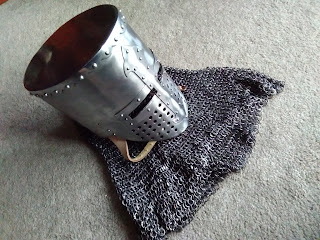
Picked up a primitive great helm otherwise known as an enclosed helmet to add to my medieval armory collection. Produced by GDFB ( Get Dressed For Battle) the familiar flat top crusader style helmet is made of 14 gauge steel, lined with a leather suspension system, weighs in at about eight pounds and is WMA authorized for combat sport. The enclosed helmet first appeared around the end of the 12th century after Norman nasal helms began to evolve with added face protection and a square profile. In retrospect the cylinder flat top profile seems counter intuitive and a step back from the conical deflective properties of spangenhelms but became the dominant helmet design of the high middle ages with sugar loaf and great helm versions being used into the 14th century. Typically worn with a padded cap and chainmail coif the enclosed helmet was probably developed in response to the use of heavy lances by armored knights and massed archers upon the medieval battlefield...
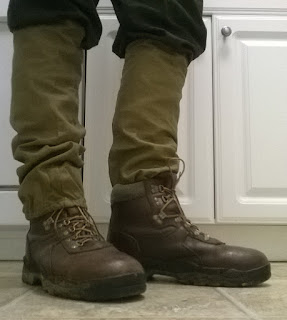
I realized this past winter preparing for snow shoeing that gaiters might just have an anti tick application. Typically they quest for hosts in low shrub and tall grasses which means they attach on your lower legs. Gaiters usually cover the lower legs from knees to footwear with some styles having heel straps that secure them in place. Gaiters could provide protection in two ways; first by covering up the gap between footware and pant hem that allow ticks to get under the pant leg and gain access to skin. The first line of defense is keeping them on the outside of your clothing. Secondly any gaiter made from a light color fabric would facilitate one being able to see the critters before they have an opportunity to climb upward looking for a gap in your clothes. With that in mind I picked up a pair of former East European military gaiters on EBay. Made of khaki cotton with snug elasticized hems they are both light weight and breathable. Long enough to cover ankles to knees I ca...
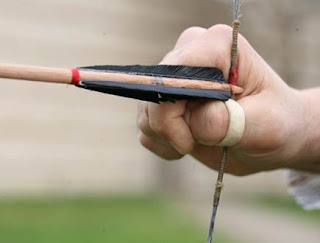
Had an opportunity to take the 40# horse bow out on a Monday afternoon opting to take some vacation time on a nice summer`s day. I originally picked up the Mongolian bow when I was having some hockey related shoulder issues so rarely do I shoot it anymore. That said whenever I do I usually attempt the thumb release technique as the lower poundage is forgiving and perfect for practice. The thumb release you ask? Many traditional Asian archery traditions used the thumb release as opposed to the three finger styles used in the West. Among them were the Mongols, Koreans, Chinese and Turks. It was used in conjunction with a thumb ring, usually made out of horn or bone. "It defines a pull-and-release technique where the major work is done by the thumb and the other fingers of the hand are involved in reinforcing the hold...." Made famous by the horse archers of Asia and the Middle East the thumb draw was ...

Comments